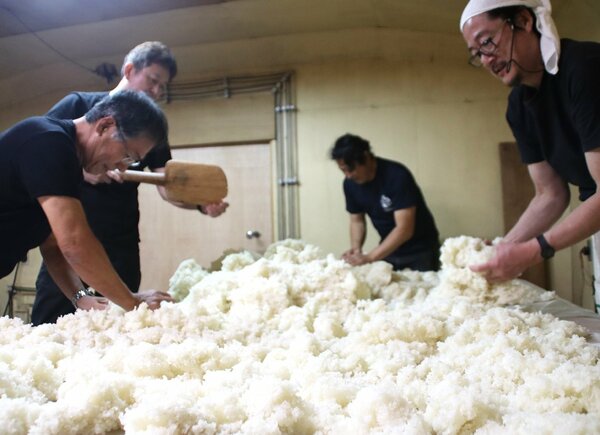
As the cold weather sets in, brewing of new sake reaches its peak at Choro Sake Brewery in Honjo, Kyotanba Town, Kyoto Prefecture. The toji (master brewer) and kurabito (brewery staff) prepare koji (malt), the base of sake, in the muro (room), and the air is enveloped in the faintly sweet aroma of sake rice.
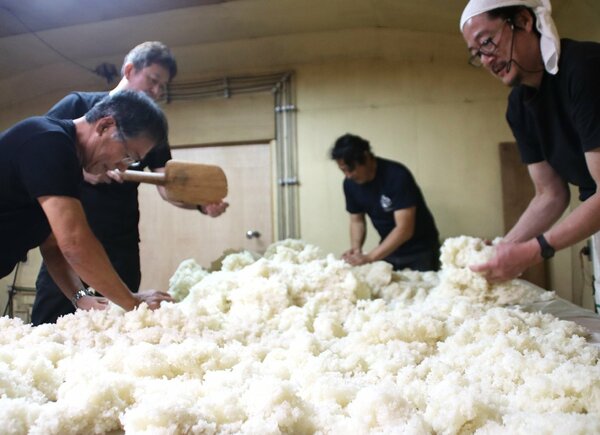
Choro Sake Brewery, founded in 1903, has been brewing since mid-November. The four brewery staff mix steamed sake rice and koji mold by hand in the muro (room), to make koji.
The koji is left to rest for two days at a temperature of around 32°C before being transferred to a tank and combined with water. To ensure efficient fermentation, the mash is transferred three times to larger tanks in a "three-stage brewing" process, and the mash is then pressed to produce a fragrant sake.
Temperature control is crucial to facilitate the activity of the bacteria, and president and toji brewer Wataru Terai (56 years old) monitors the condition of the koji from 4 a.m. every morning. "Koji is the lifeblood of sake. Traditional sake brewing cherishes this to make good sake," he says proudly.
New sake is ready from the end of December, and brewing continues until mid-February.