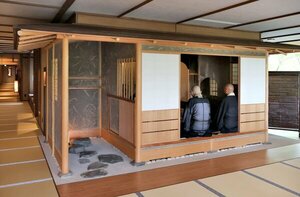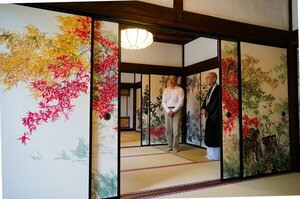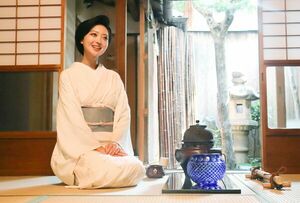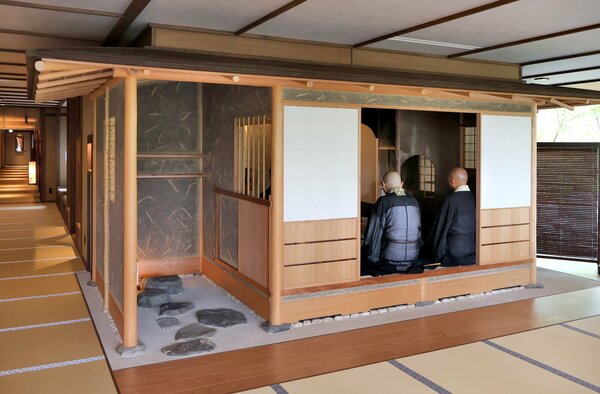
A replica of "Ryokaku-tei"—a tea house designated as an Important Cultural Property belonging to Ninna-ji Temple—has been installed at "Kyoto Omuro Kadensho," a facility that opened in May just outside the temple gates in the Omuro district of Ukyo Ward, Kyoto. An inaugural tea ceremony was held to mark the occasion, attended by approximately 20 people, including Taishu Segawa, the head priest (Monzeki) of Ninna-ji, representatives from neighboring religious sites such as Myoshin-ji, Daikaku-ji, and Kitano Tenmangu, as well as local residents.
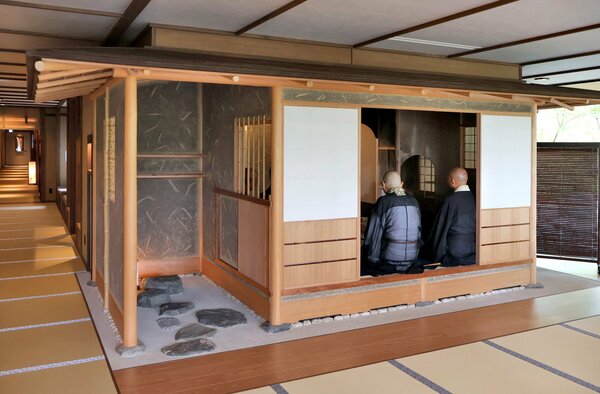
The original Ryokaku-tei is an Important Cultural Property located within the Ninna-ji Palace gardens. It is believed to have been designed by the mid-Edo period painter Ogata Korin, though there is also a theory that it served as the residence of his younger brother, the potter Ogata Kenzan. Originally built outside the temple gates, it was relocated to its current site during the Edo period.
At the inaugural tea ceremony held on August 7, 2026, Head Priest Segawa and others entered the replica tea house—situated within the air-conditioned facility—and spent a pleasant time savoring tea while gazing out at the garden scenery.
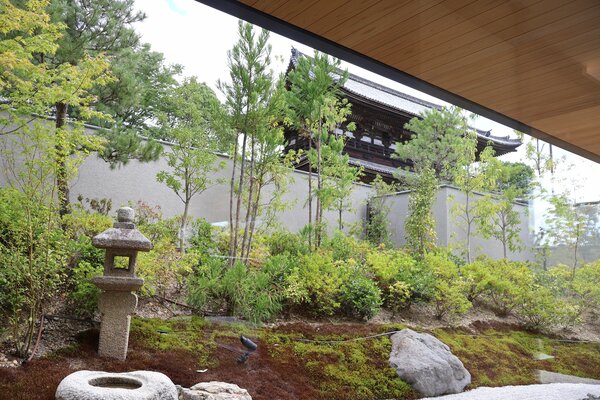
The hotel stands three stories above ground with one basement level, boasting a total floor area of approximately 5,800 square meters. It features 67 guest rooms and is operated by Kyoritsu Maintenance (Tokyo), a company that manages resort hotels and other facilities nationwide. Regarding the hotel's construction, local residents had filed a lawsuit seeking the revocation of a special permit granted by Kyoto City under the Building Standards Act; however, the residents lost the case in both the initial trial and the appeal.
Head Priest Taishu Segawa remarked, "It is wonderful that the hotel has been built; the atmosphere in front of the temple gates has changed for the better and looks beautiful. I am grateful that they recreated Ryokaku-tei, as it contributes to the preservation of traditional culture."
The hotel plans to make the tea house available for use by local residents in the future, aiming to deepen cultural exchange within the Omuro community.