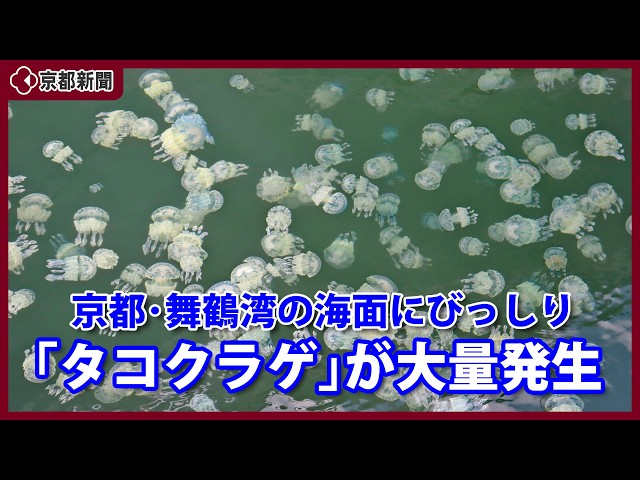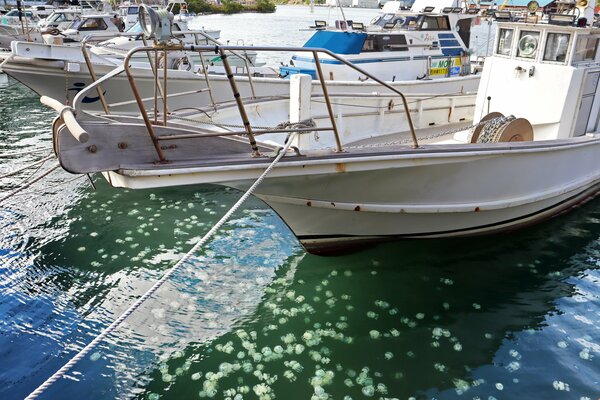
Around mid-August, a massive swarm of spotted jellyfish (*Mastigias papua*) appeared at a boat landing near the Maizuru City Hall (in Kitasui, Maizuru City), attracting the attention of locals and tourists alike. City officials and captains of fishing boats using the landing described the scene as unprecedented, prompting speculation that climate change might be the cause.
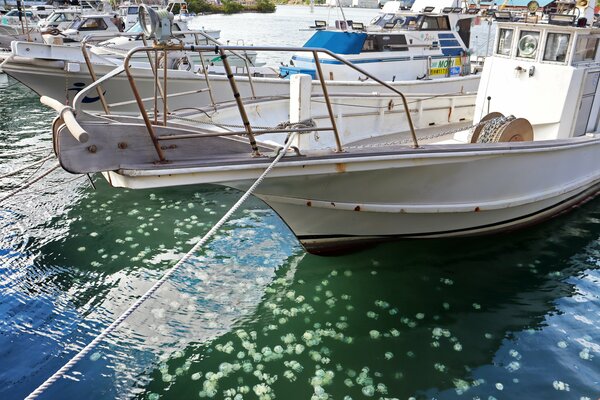
Spotted jellyfish measure about 10 centimeters in diameter and are characterized by their bouncy movements. In waters near Japan, they typically inhabit the Pacific coast, ranging from the Kanto region down to Okinawa Prefecture.
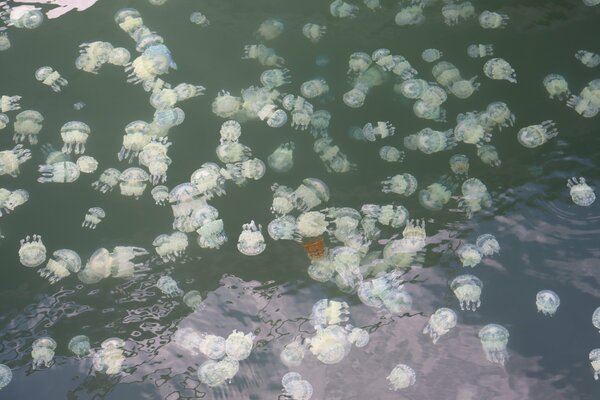
Tourists visiting the Maizuru Red Brick Park witnessed the jellyfish crowding the water's surface at the landing. A couple in their seventies visiting from Nara City expressed their excitement, saying, "We’ve only ever seen them in aquariums, so as tourists, we were lucky to see them up close." However, they also voiced concern, adding, "I hope this doesn't affect the fishing industry."
Kazuhiko Morita (69 years old), who operates a recreational fishing boat, remarked, "I’ve kept my boat moored here for about 20 years, but I’ve never seen them in such large numbers before. It’s abnormal." While the small jellyfish do not interfere with boat navigation, Morita is concerned about potential disruptions to the marine ecosystem. "There’s a lot of seaweed in the bay this year, and we aren't catching any Japanese whiting. I wonder if it’s the result of high water temperatures."
The jellyfish submerged into deeper water on August 27, a day of heavy rain. By August 31, only a few could be seen drifting in the water.
Tetsuji Hisada, a chief researcher at the Kyoto Prefecture Marine Center (Miyazu City), noted that it is rare to see spotted jellyfish in the waters off Kyoto Prefecture. While noting that the cause of the mass outbreak cannot be definitively determined, the expert speculates that the intensification of the Tsushima Current may have caused the organisms to be swept in by the current and driven by the wind into the inner reaches of the bay. Acknowledging that rising seawater temperatures are an undeniable fact, the expert suggested this could be a contributing factor and indicated that measures would need to be taken if the phenomenon begins to impact the fishing industry.