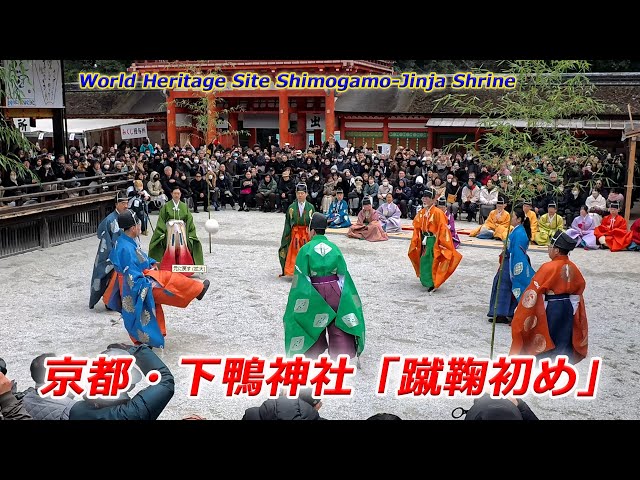
On January 4, 2026, Shimogamo Shrine in Kyoto's Sakyo Ward held its annual "Kemari Hajime" (first kemari game). The sight of colorfully attired worshippers kicking balls into the New Year's sky drew cheers from worshippers on their first visit of the year.
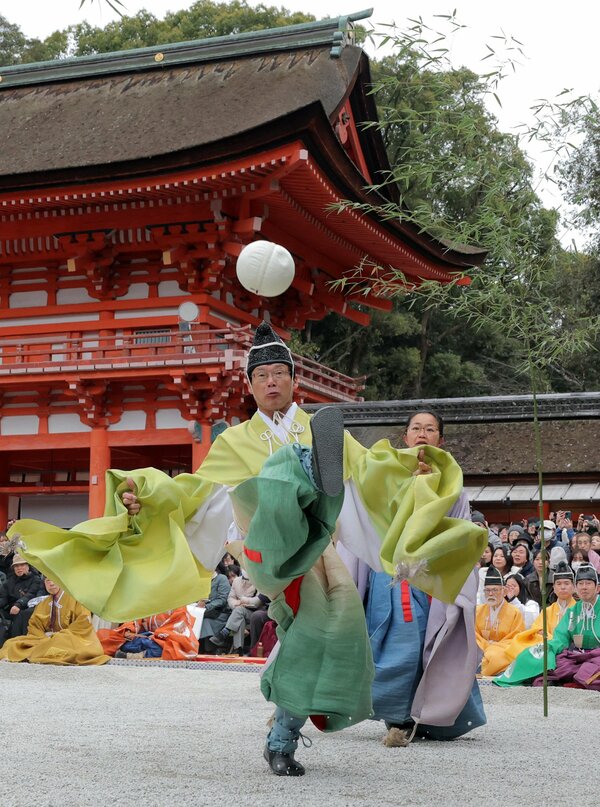
Kemari was introduced to Japan from the continent during the Asuka period (1603-1868) and became popular among the aristocracy during the Heian period (794-1185). It is believed that kicking the ball in a way that makes it easy for the other person to catch it is best, and every year the Kemari Preservation Society makes an offering at Shimogamo Shrine. Those who kick the ball are called "mariashi," and this year around 20 men and women from the preservation society participated.
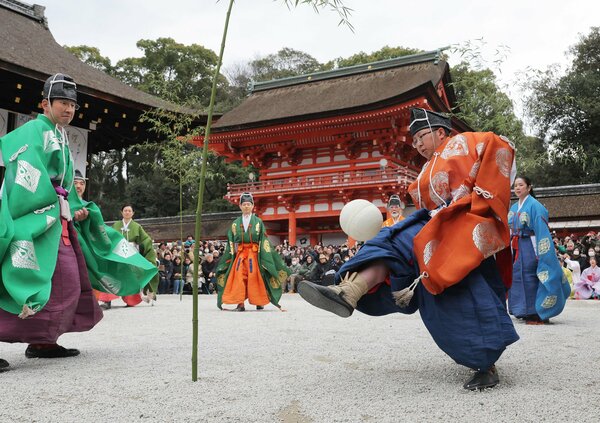
A "mari-niwa" (ball garden) was set up on the shrine grounds, with green bamboo planted at each corner. Wearing eboshi (traditional Japanese hats) and vibrant blue and yellow mizuginu and hakama (traditional Japanese traditional clothing), six to eight people formed a circle and kicked deerskin balls into the air, yelling "ari," "yaa," and "ou." When the kicks continued well or the balls flew high, the worshippers applauded and cheered.
As new balls are used for the New Year, the game is said to be slippery and difficult. Preservation Society Chairman Takashi Yamamoto (76 years old) said, "We aimed to be considerate of our opponents and kick the balls beautifully. We hope the gods enjoy watching us and grant everyone their blessing."