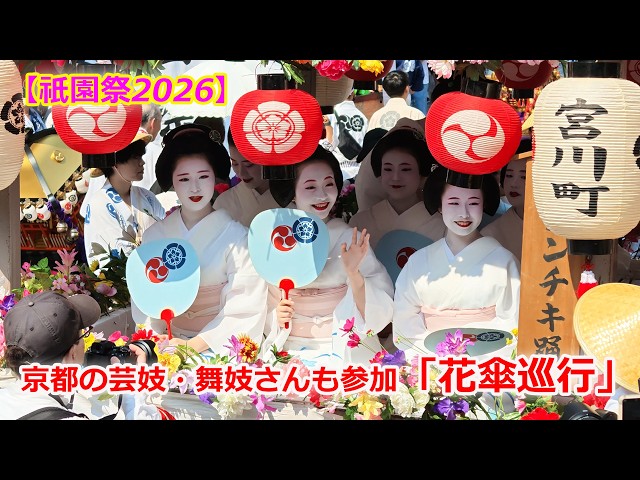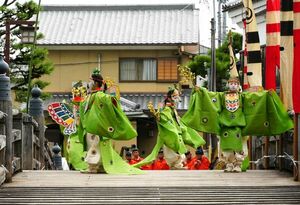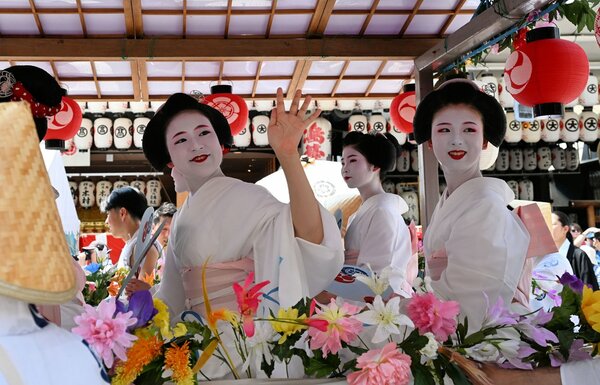
On July 24, 2026, the Yamaboko Float Procession—the highlight of the Gion Festival’s *Ato-matsuri* (Latter Festival)—took place in central Kyoto. Amidst heat that had intensified since the *Saki-matsuri* (Former Festival) a week earlier, the floats—some featuring newly crafted ornaments—advanced majestically. Spectators lining the route also offered thunderous applause to the *geisha*, *maiko*, and children participating in the Hanagasa (Flower Umbrella) Procession, which was marking a milestone anniversary.
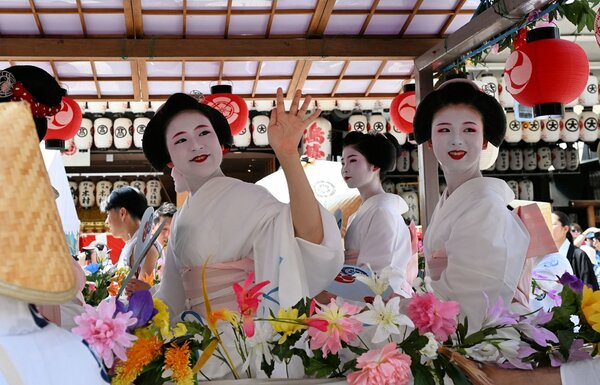
A procession of approximately 1,000 participants—including *geisha*, *maiko*, and children carrying portable shrines (*mikoshi*)—walked from central Kyoto to Yasaka Shrine (Higashiyama Ward). While the event usually involves two *hanamachi* (geisha districts), this year—marking the 60th anniversary—all four districts participated, adding extra splendor to the parade.
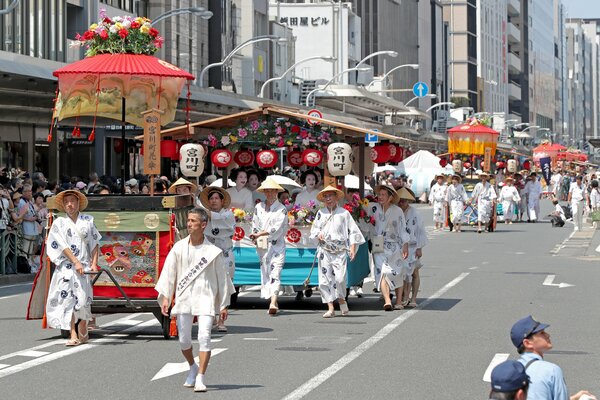
The Hanagasa Procession began in 1966, the year the *Saki-matsuri* and *Ato-matsuri* float processions were consolidated into a single event on July 17. It has continued along a new route since the *Ato-matsuri* float procession was revived in 2014.
At 9:30 a.m., four children's portable shrines departed from the Seitoku Schoolhouse of Shimogyo Junior High School (Shimogyo Ward). The children carrying the shrines advanced in unison, chanting "Hoit, hoit," while accompanying adults fanned them with folding fans.
Floats representing the Miyagawacho, Pontocho, Gion Kobu, and Gion Higashi districts followed, with *geisha* and *maiko* smiling and holding *uchiwa* (flat fans). A *kuji-aratame* (lottery verification ceremony) was also conducted in front of the Shijo Otabisho (a temporary resting place for the deities) in Shimogyo Ward.