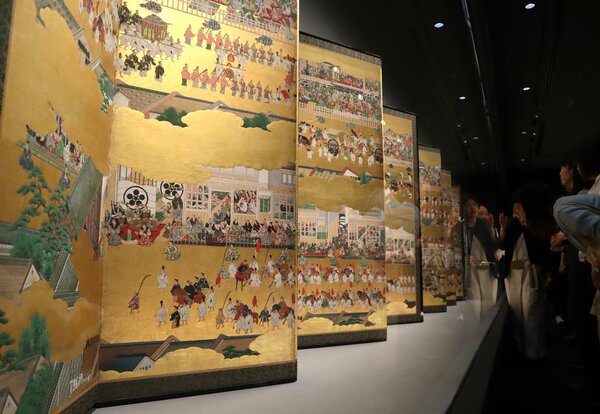
This year marks the 400th anniversary of the "Kanei Imperial Visit," an event where the Tokugawa Shogunate hosted Emperor Go-Mizunoo at Nijo Castle. To commemorate this milestone, a special exhibition titled "The Kanei Imperial Visit and the Cultural Figures of the City of Flowers"—organized by the Kyoto Shimbun and others—opened on September 5, 2026, at the Sen-oku Hakuko Kan Museum in Sakyo Ward, Kyoto. The exhibition showcases approximately 80 items, including the "Folding Screen Depicting the Imperial Visit to Nijo Castle" (a designated cultural property of Kyoto City), which vividly records the event, and artifacts associated with Masako—the daughter of the second shogun, Tokugawa Hidetada, who married Emperor Go-Mizunoo. It also focuses on the distinctive culture of the Kanei era.
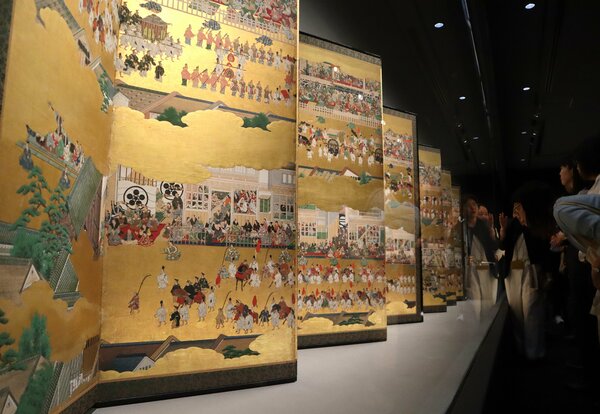
The Kanei Imperial Visit was intended, in part, to demonstrate harmony between the Imperial Court and the Shogunate; the grand procession on September 6, 1626, involved approximately 9,000 participants, including *daimyo* (feudal lords) from across the country. The "Folding Screen Depicting the Imperial Visit to Nijo Castle" portrays as many as 3,226 people, including spectators. The artwork captures not only the human interactions but also the intricate patterns of the gorgeous *kosode* (short-sleeved kimono) worn at the time, conveying the bustling atmosphere and daily life of the era in minute detail.
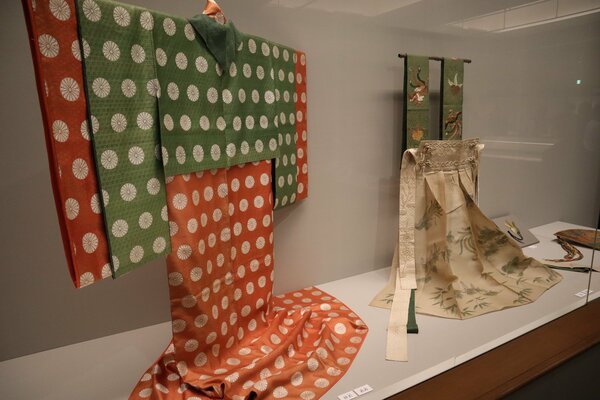
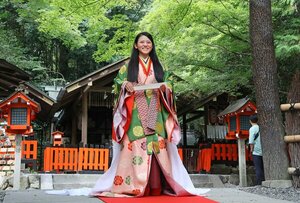
The exhibition also highlights Masako, a central figure in the flourishing Kanei culture—an era defined by the mingling of court nobles, samurai, and townspeople. On display are items such as a *juni-hitoe* (twelve-layered ceremonial robe)—believed to be the oldest extant example—which Masako wore upon her investiture as Empress; *oshi-e* (padded fabric pictures) that she helped create and gifted to close associates; and tea utensils once cherished by cultural figures with whom she interacted, offering a glimpse into the connections shared among the cultural elite of the time.
The exhibition runs until October 18. Admission fee required. Exhibits will be rotated during the exhibition period.