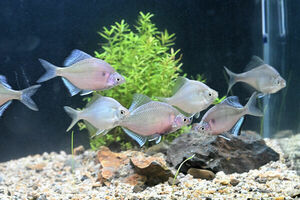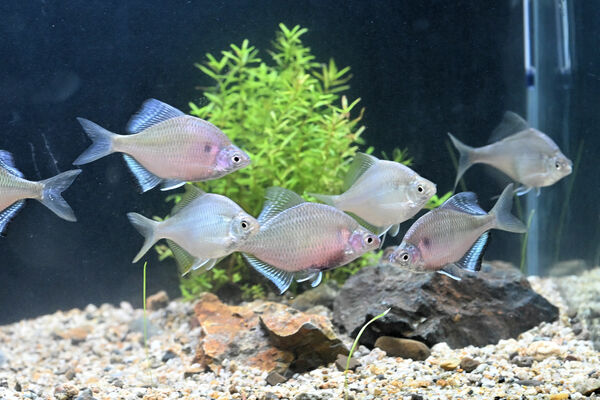
Itasenpara, a freshwater fish that is on the verge of extinction in the Yodo River basin, is on display at the ward general government building in Sakyo Ward, Kyoto City. Ten shimmering silver and pink creatures swim around in the aquarium at the Kyoto Biodiversity Center in the same government building. It was bred by the Osaka Prefectural Research Institute for the Environment, Agriculture, Forestry and Fisheries, and is on display as part of a collaboration agreement with the center. With the aim of returning the animals to the wild in the future, the first step is to make the public aware of their beautiful appearance.
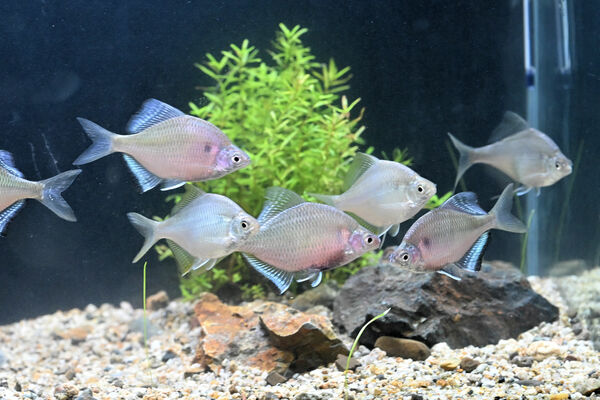
Itasenpara is a member of the tanager family and is a national natural monument. The body length is 4 to 6 cm, and the male has a beautiful pink color. They prefer freshwater areas with slow flow, but their numbers have been greatly reduced due to river improvements and the reclamation of the former Ogura Pond.
The research institute is breeding populations collected in the Yodo River basin with the aim of reintroducing them into the wild. They were released into the river about 10 years ago, and their numbers temporarily increased, but they are now almost invisible again. Possible causes include being predated by non-native fish, and damage caused by nutria eating the bivalve molluscs in which itasemparas lay their eggs.
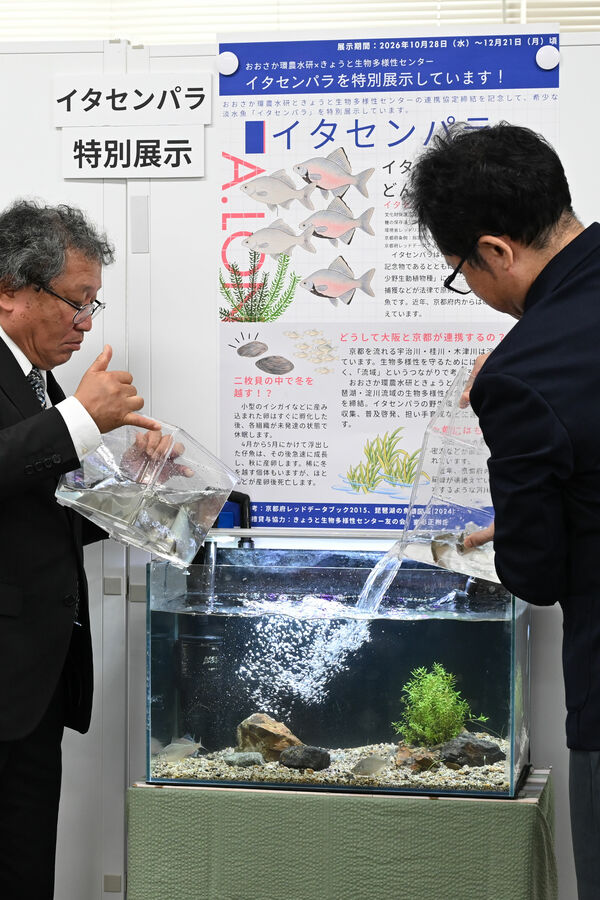
On October 27, the Institute and the Center signed a collaboration agreement, believing that it is essential to preserve the rich ecosystem of the Yodo River basin, which Itasenpara symbolizes, beyond prefectures.
At the same time, an exhibition of Itasenpara was started at the center's office on the second floor of the general government building. The center is a base for individuals and organizations working on environmental conservation within the prefecture. Director Takakazu Yumoto says, ``We hope that by communicating about Itasenpara, we will lead to highly effective initiatives.'' They hope to work together to find ways to return the animals to the wild, such as countermeasures against invasive species.
The exhibition will be on display until December 21st. Monday, Wednesday, and Friday from 1-5 p.m. Free viewing.