In the Tango region of Kyoto Prefecture—an area defined by coastal and mountainous landscapes that offer a striking contrast to the atmosphere of the ancient capital—a variety of unique, private-use vacation rentals are emerging. These properties, which accommodate only one group at a time, allow guests to enjoy a private retreat with family or friends. Among them are locations near the iconic sandbar of Amanohashidate, the traditional *funaya* (boat houses), and the historic "Chirimen Kaido" (Crepe Road).
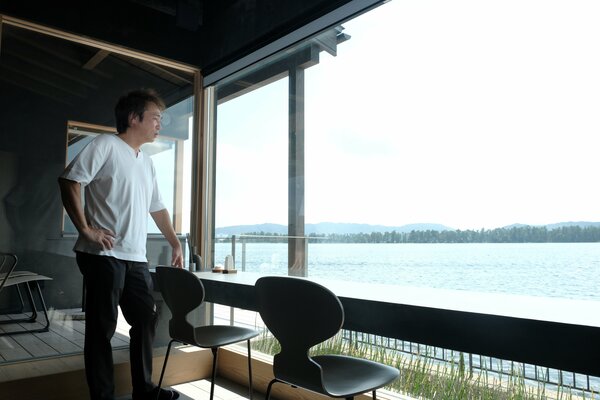
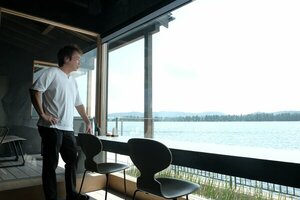
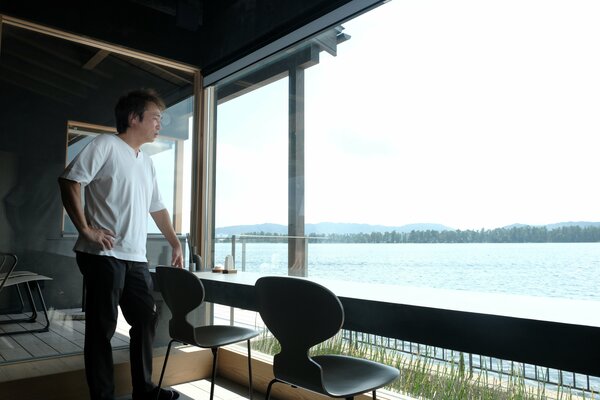
One such property is "torch," located along the shores of Aso-umi—the body of water enclosed by the Amanohashidate sandbar—in the Komatsu district of Miyazu City, Kyoto Prefecture. Through its large glass windows, guests can see the pine-lined sandbar of Amanohashidate stretching out across the sparkling sea.
Opened in 2024, the facility was designed by Shinya Inoue (54 years old), who runs an architectural design firm in the neighboring Mizojiri district.
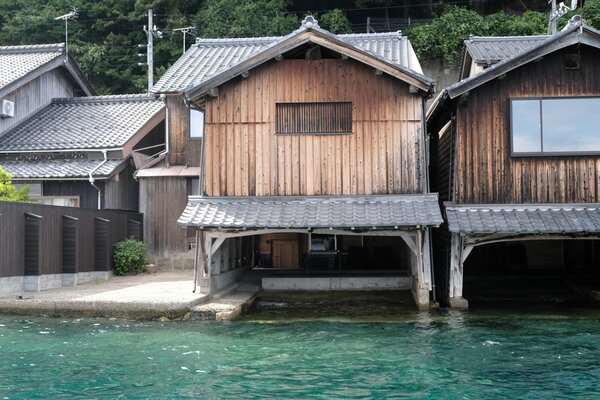
A key advantage of these single-unit rentals is that they do not incur labor costs when unoccupied. Inoue named the property "torch" with the hope that it would serve as a beacon—a "torch"—to illuminate the area, which is home to a collection of traditional *funaya* boat houses.
The interior design is also carefully considered; the walls are covered in *washi* (traditional Japanese paper) dyed with ink, a nod to the famous ink-wash painting *Amanohashidate-zu* by the artist Sesshu. The property accommodates up to six adults, offering them the freedom to spend their time as they please. "You can wake up in bed and look out at the sandbar," says Inoue. "It’s an extraordinary experience that also helps guests get to know the local region." The facility has been well-received by both domestic and international visitors.
According to the Kyoto Prefecture Tango Public Health Center (based in Kyotango City), which oversees hygiene management for such accommodations, these private-use rentals typically fall into two categories: "simple lodging" facilities licensed under the Hotel Business Act, or private lodgings (*minpaku*) operated under the Private Lodging Business Act—often utilizing vacant vacation homes or detached annexes. In the Tango region, as of the end of March this year, the number of licensed "simple lodging" facilities had reached 385—an increase of 102 compared to four years prior—while the number of registered private lodgings (*minpaku*) had risen by 23, reaching a total of 36. A representative notes, "While we don't have exact figures for 'entire-property' rentals, it is clear that they are on the rise."
In the town of Ine—a destination bustling with inbound tourists—this type of accommodation is also spreading. One such example is "Tatsuki," which opened in April in the Kamejima area of Ine. The property is a renovated complex consisting of a *funaya* (traditional boat house) and a main residence. The *funaya*, which dates back to the Meiji era, still features its original, sturdy timber beams. According to Moyuru Yoshimoto (34 years old), who manages the property, it was fully booked throughout September. "Guests can enjoy squid fishing right from the lodging, or take a water taxi to tour Ine Bay," she says.
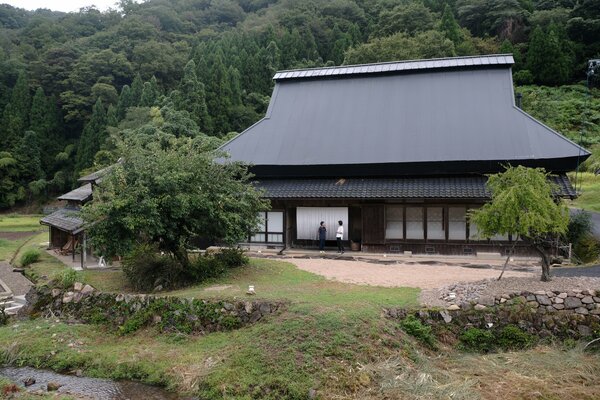
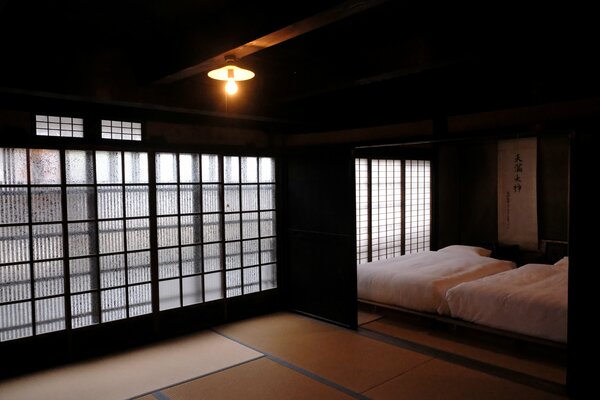
These rentals are not limited to coastal areas; they can also be found in the mountains. "Nomano" is a 100-year-old traditional house located in Sugawa, Yasaka-cho, Kyotango City. Nestled in a valley with a clear, flowing stream, the property promises guests that "time will slow down and stand still" during their stay in the Oku-Tango region.
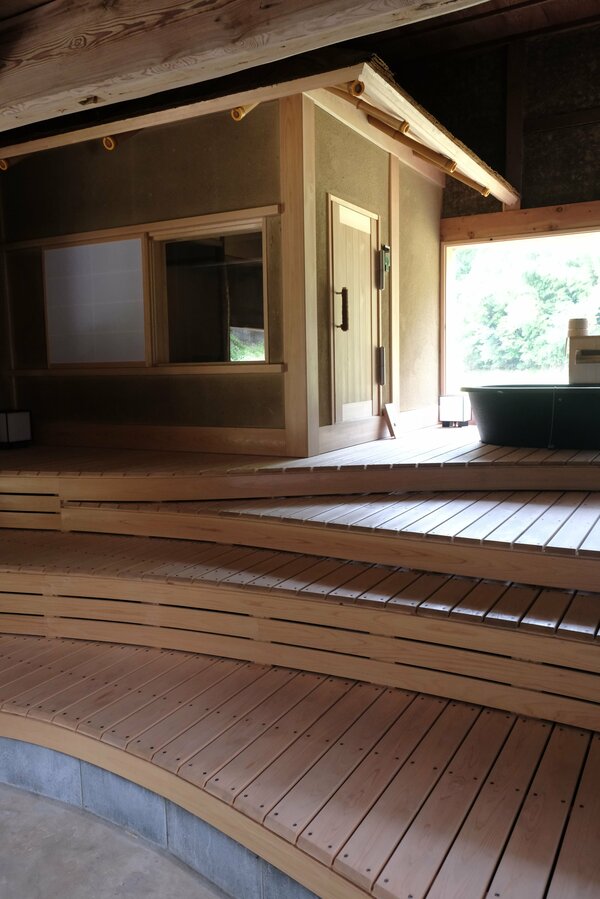
The project was initiated by a man originally from Yasaka-cho—who now runs a real estate company in Tokyo—with the hope of revitalizing a region currently facing depopulation. The main house features a traditional *irori* (sunken hearth) and a wood-burning stove, while a detached building houses a tea-ceremony-style sauna. Guests can relax in a multi-level space designed to evoke the appearance of terraced rice paddies. Saki Hirabayashi (33 years old), a staff member, explains, "People come here to escape the hustle and bustle of the city; they can even use the nearby stream as a cold plunge. Furthermore, the operation creates local employment through roles in cleaning and guest reception."
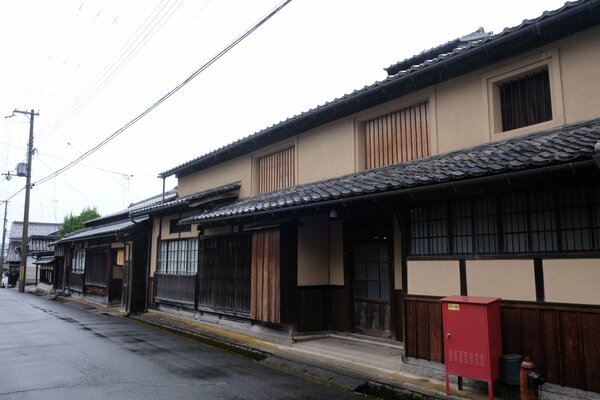
"Entire-property" rentals also serve as a gateway for attracting visitors to a region—as seen in the "Chirimen Kaido" (Crepe Street) district in Kaya, Yosano Town, which is designated as a National Important Preservation District for Groups of Traditional Buildings. The townscape, featuring merchant houses and weaving workshops that once thrived on the production of *Tango Chirimen* (a traditional crepe fabric), is charming—yet it sees few tourists. In May, a facility called "KAYA" opened here, repurposing a former weaving workshop located along the historic street.
Operated by "Kyoto Tango Kikaku"—an affiliate of a company that runs a craft beer brewery in Yosano Town—the establishment offers draft beer brewed with locally grown hops. Project manager Shota Tsutsui (31 years old) notes, "Guests can come to stay in a space that feels like a hidden retreat for adults, and it also serves as an entry point for them to discover the appeal of the *Chirimen Kaido* (Crepe Street)."
Seiji Nakao, a professor of tourism studies at Fukuchiyama Public University, observes, "Renting out entire buildings functions much like a 'distributed hotel' model. While this trend may grow in the Tango region—given the rising number of vacant properties—there is a risk of friction with local residents if these ventures are viewed merely as lodging businesses, as is often the case in major metropolitan areas. I hope operators will remain mindful of their surroundings, foster interaction between visitors and local residents, and work toward building a 'related population'—people who maintain an ongoing connection to the area—with a medium- to long-term perspective."