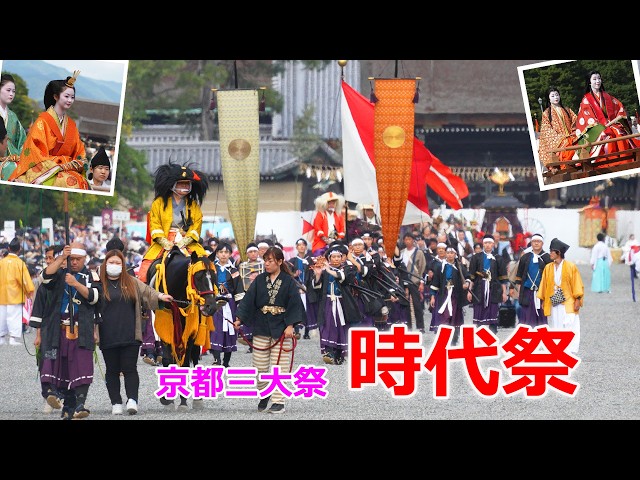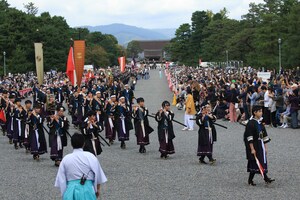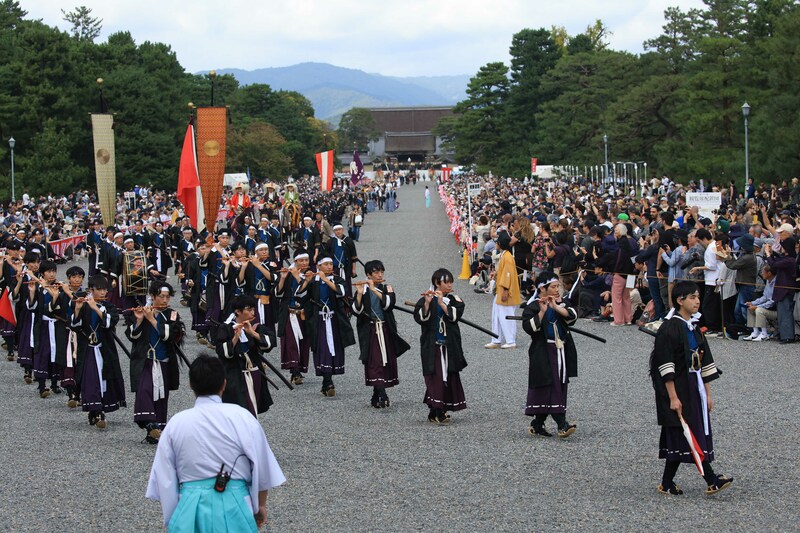
The Jidai Matsuri (Festival of the Ages)—one of Kyoto’s three major festivals and often described as a "living historical picture scroll"—took place in Kyoto City on October 22, 2026. A procession of approximately 2,000 participants, recreating scenes from history, made its way through the city’s streets, drawing the attention of tourists lining the route.
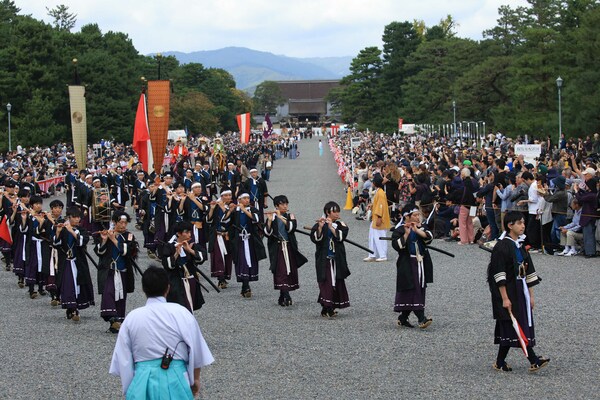
The festival featured 20 distinct groups, tracing over a millennium of history—from the Meiji Restoration back to the relocation of the capital to Kyoto during the Heian period.
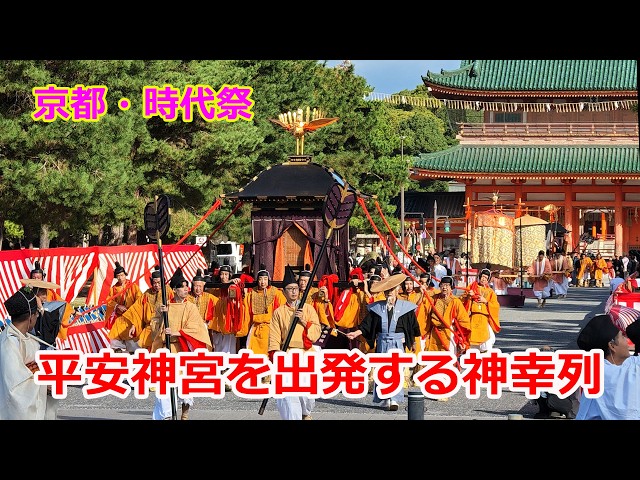
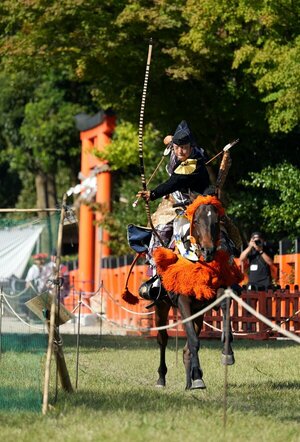
At noon, the procession began at the Kyoto Imperial Palace Park (in Kamigyo Ward), led by the "Ishin Kinno-tai" (a group representing Meiji Restoration-era loyalist troops) marching to the spirited sound of drums and flutes. Participants—local residents dressed as historical figures such as warriors, civil officials, and imperial princesses—traveled a 4.5-kilometer route, concluding at Heian-jingu Shrine (in Sakyo Ward). The final group, representing the *kyusen-gumi* (archers), arrived at 4:00 p.m.
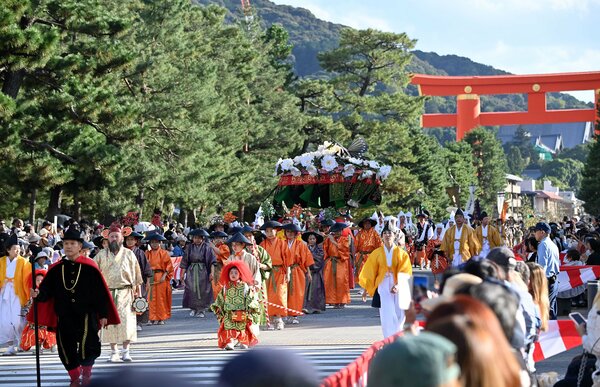
According to the Kyoto Prefectural Police, the event drew approximately 45,000 spectators—an increase of about 2,000 compared to the previous year, when the festival was affected by rain.
The 86-year-old head of the organizing committee, who led the procession on horseback as the chief commissioner, remarked, "The weather was excellent, and I believe we were able to effectively share Kyoto’s traditional culture with a large audience, including many international tourists."
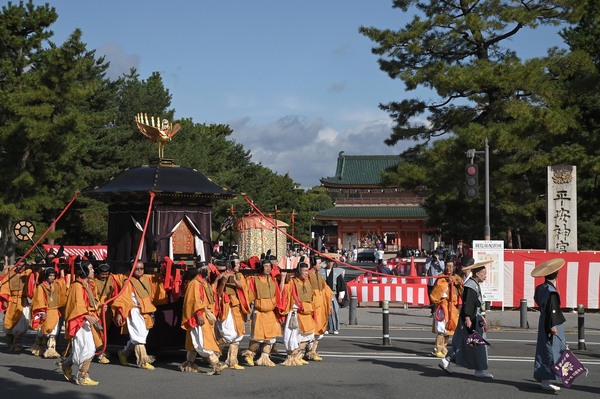
The Jidai Matsuri originated in 1895, the year Heian-jingu Shrine was established to commemorate the 1,100th anniversary of the relocation of the capital to Kyoto.