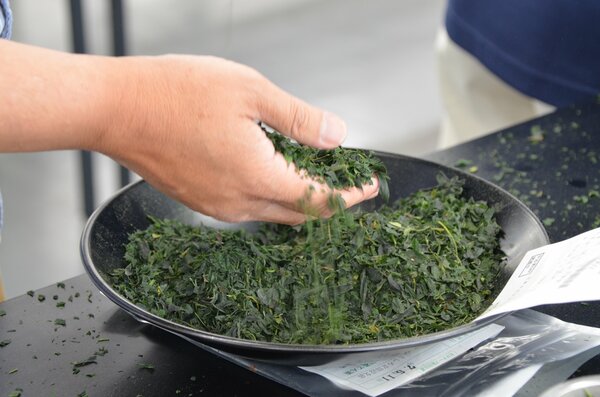
The "Cha-tome-ichi" (final trading session) was held, marking the conclusion of trading for the 2026 season's first-flush and second-flush Uji teas. Driven by sustained demand from inbound tourists, average prices across the board—particularly for *tencha* (the raw material for matcha)—hit record highs.
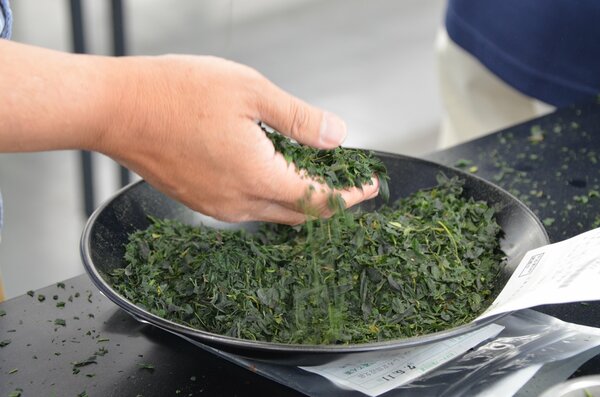
According to the JA Zen-Noh Kyoto Tea Market (in Joyo City, Kyoto Prefecture), the total trading value through the end of July reached 12.9 billion yen, an increase of approximately 30% year-on-year and an all-time high.
By tea variety, the average price of *tencha* rose amidst the matcha boom. The price for hand-picked *tencha* reached 52,275 yen (up 10% from the previous year), while machine-harvested *tencha* rose 21% to 17,250 yen.
As farmers shifted production toward *tencha*, the trading volumes for *gyokuro* and *sencha* declined. Due to the resulting supply shortage, the price of hand-picked *gyokuro* rose 27% to an average of 42,909 yen, and *sencha* saw a significant 48% increase to 6,646 yen.
While the total trading volume shifted from the previous year's decline to a slight 1% increase, production of second-flush tea trended downward due to extreme heat; consequently, high prices and supply shortages persist across all tea varieties.
Tea merchants participating in the trade expressed concern, asking, "Won't these excessively high prices cause consumers to turn away?"
The final trading session took place on July 31 at the JA Zen-Noh Kyoto Uji Tea Distribution Center (Terada, Joyo City, Kyoto Prefecture).