The "Kokonoe" camellia, a variety said to have been cherished by emperors during the Edo period and passed down through Hokyo-ji Temple in Kamigyo-ku, Kyoto, known as the "Temple of Dolls," has recently been revived on the temple grounds. Although the original tree withered at Hokyo-ji, a sapling that Takeda Pharmaceutical Company's Medicinal Plant Garden (Sakyo-ku, Kyoto), which had been protecting it for about 70 years, transplanted it. Large blossoms with red streaks on a white background are expected to bloom in April, and Hokyo-ji Temple is delighted that the camellia has returned.
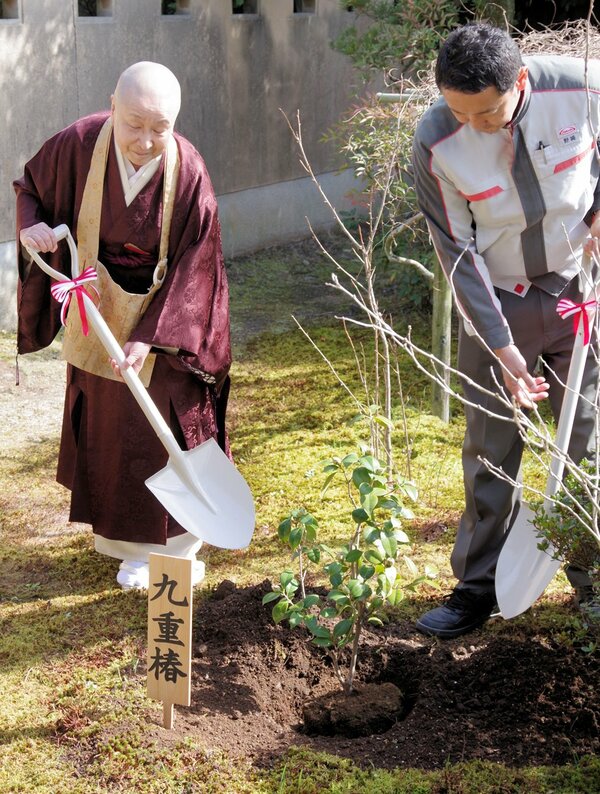
Hokyo-ji is a nunnery where imperial princesses have served as abbots. The Kokonoe camellia is said to have been a favorite of Emperor Go-Mizunoo in the early Edo period.
Takeda Pharmaceutical Company's Medicinal Plant Garden began cultivating camellias in 1956 to serve as a backup for historical horticultural varieties. Currently, they cultivate 505 varieties, including 27 entrusted to them by temples and shrines.
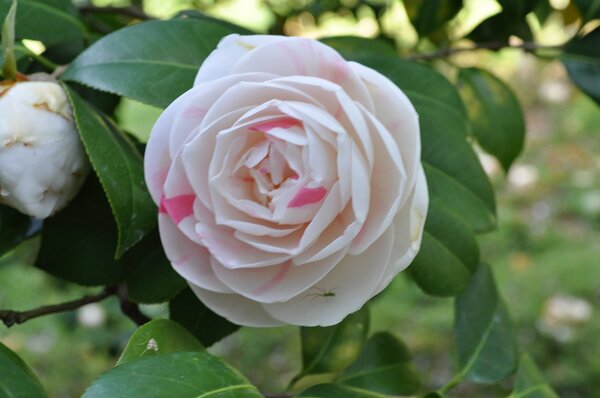
Last year's investigation revealed that the camellia thought to be Kokonoe at Hokyo-ji was a different variety, and the original plant had been lost. The plant had been preserved at the Takeda Pharmaceutical Company's Medicinal Plant Garden for 69 years, and a seedling approximately 60 centimeters tall, propagated by cuttings, was returned on March 5th.