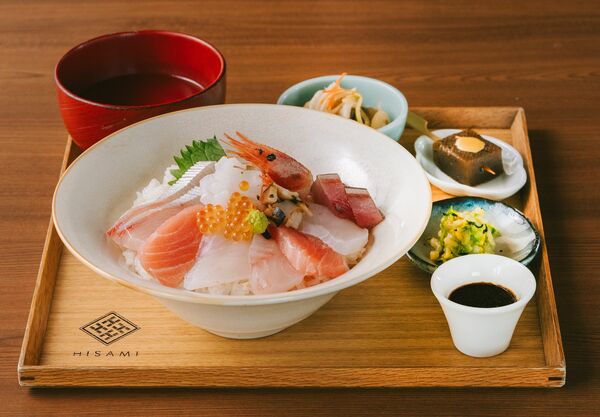
The "Kyo-Kaisen-don" (Kyoto Seafood Bowl)—priced at 2,300 yen—arrived, featuring fresh seafood landed at three fishing ports in Kyotango City and Ine Town, Kyoto Prefecture. The toppings are dazzling, offering a visual feast before one even takes a bite. Tasting the locally grown rice allows its delicious flavor to spread across the palate.
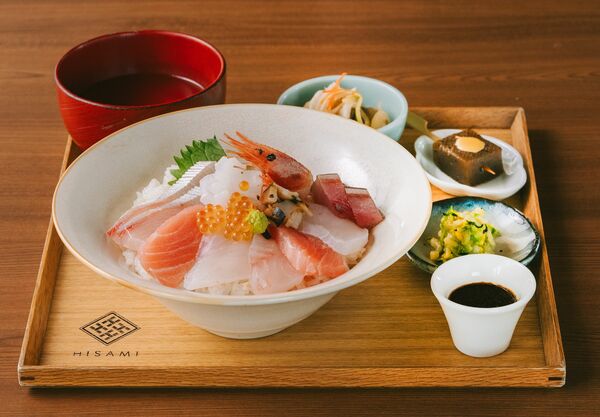
"Chisan Shokudo HISAMI" offers a selection of eight to ten types of seafood toppings at any given time. The meal comes with a specially blended miso soup, homemade pickles, and small side dishes, allowing diners to fully enjoy the bounty of Tango’s sea and mountains.
Also popular are the "Sashimi Set Meal" (2,600 yen) and the "Heshiko Set Meal" (2,400 yen), which feature the same seafood toppings found in the seafood bowl.
The *heshiko* (salt-cured, rice-bran-aged mackerel) is sourced from the nearby sister shop, "Heshiko Kobo HISAMI." It is pre-grilled to about 80% doneness before being brought to the table, where diners can finish grilling it to their preferred level on a small charcoal brazier (*shichirin*) served with the meal. To finish, diners enjoy *ochazuke*—rice topped with flaked *heshiko* and dashi broth poured over it. Masahiro Imade (38 years old), the executive director, notes, "These three dishes—including the Kyo-Kaisen-don—account for about 80% of our sales."
The business originated as a diner run by the grandparents of the current president, Ryu Imade (65 years old), in the town of Taiza in Kyotango City. While Western-style cuisine was the mainstay during his grandparents' era, the shop was relocated in 1993 to a hilltop overlooking the Tango Sea with the aim of serving sashimi and crab to tourists. Following a store renovation in 2014, the company opened "Heshiko Kobo" in 2017 to focus on *heshiko*—a specialty the president learned to make while helping his grandparents during his childhood. Alongside the seafood dishes, the Western-style menu remains a staple; it is said that the flavors—honed over nearly eight decades—have hardly changed.