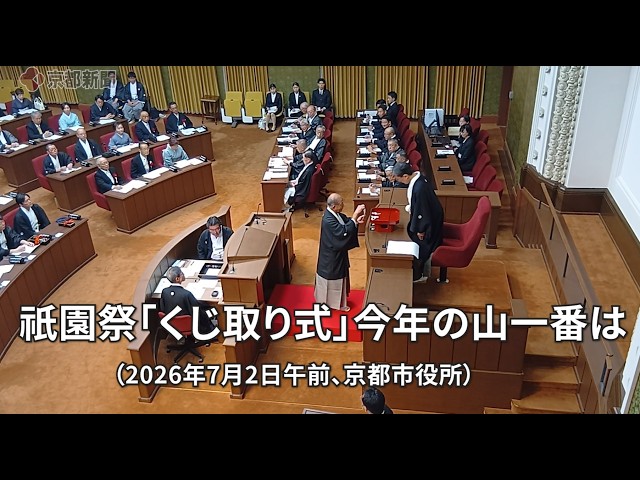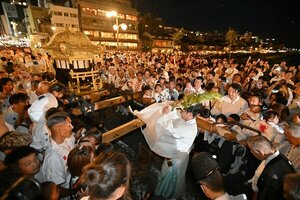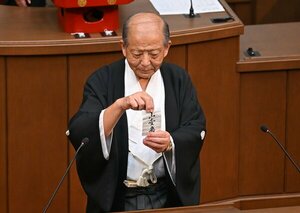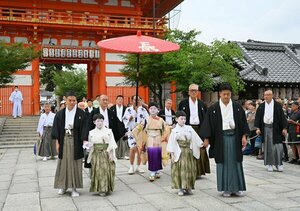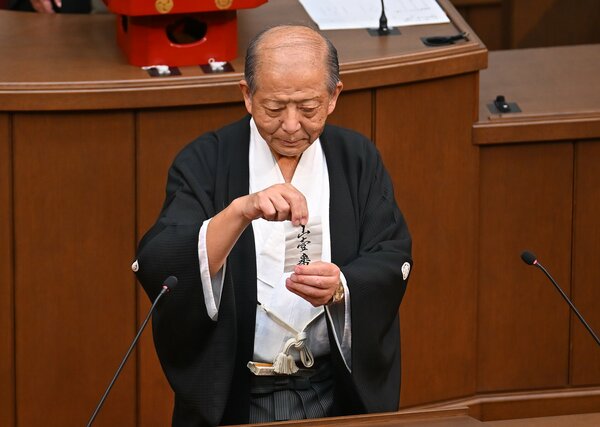
The "lot-drawing ceremony" to determine the order of the Gion Festival's *Yamaboko* float procession took place on the morning of July 2, 2026, at the Kyoto City Council chamber in Nakagyo Ward. Kakkyo-yama was selected as the "Yama-ichiban" (the first *Yama* float), a position that follows immediately behind the Naginata-boko—the float that always leads the procession during the *Saki-matsuri* (Early Festival) on July 17.
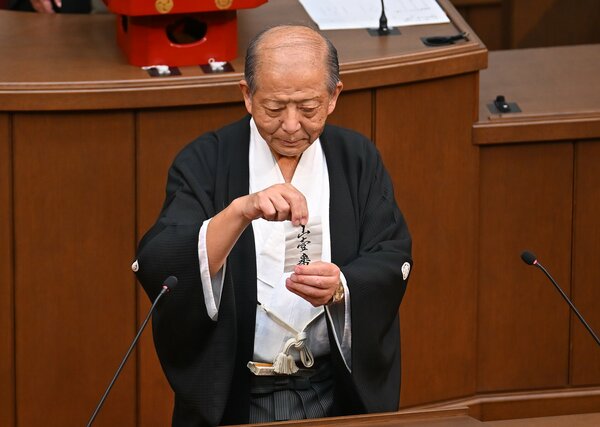
There is a one-in-thirteen chance each year of drawing the "Yama-ichiban" slot. Securing this position is considered a great honor, as it places the float at the very front of the procession (excluding the "Kuji-torazu" floats, which have fixed positions), and is said to influence sales of that year's *chimaki* (warding-off-evil rice dumplings) and related merchandise.
The *Yamaboko* floats are divided into two groups: the *Saki-matsuri* group (23 floats), which parades through the city on July 17, and the *Ato-matsuri* (Late Festival) group (11 floats), which parades on July 24. The ceremony involves representatives from 24 of the 34 total floats drawing lots; floats with pre-determined procession orders are excluded, and the *Saki-matsuri* and *Ato-matsuri* groups draw lots separately without mixing.
Kakkyo-yama belongs to the *Saki-matsuri* group. Within that group, only 13 of the 29 floats—excluding the "Kuji-torazu" floats with fixed positions—are eligible to become the "Yama-ichiban" that follows the Naginata-boko.
The lot-drawing ceremony is said to have originated in 1500, following the Ōnin War, as a means to prevent disputes over which float would take the lead in the procession.